2026 Symposium on Education in Entertainment and Engineering Brings Academia and Industry Together at Purdue University
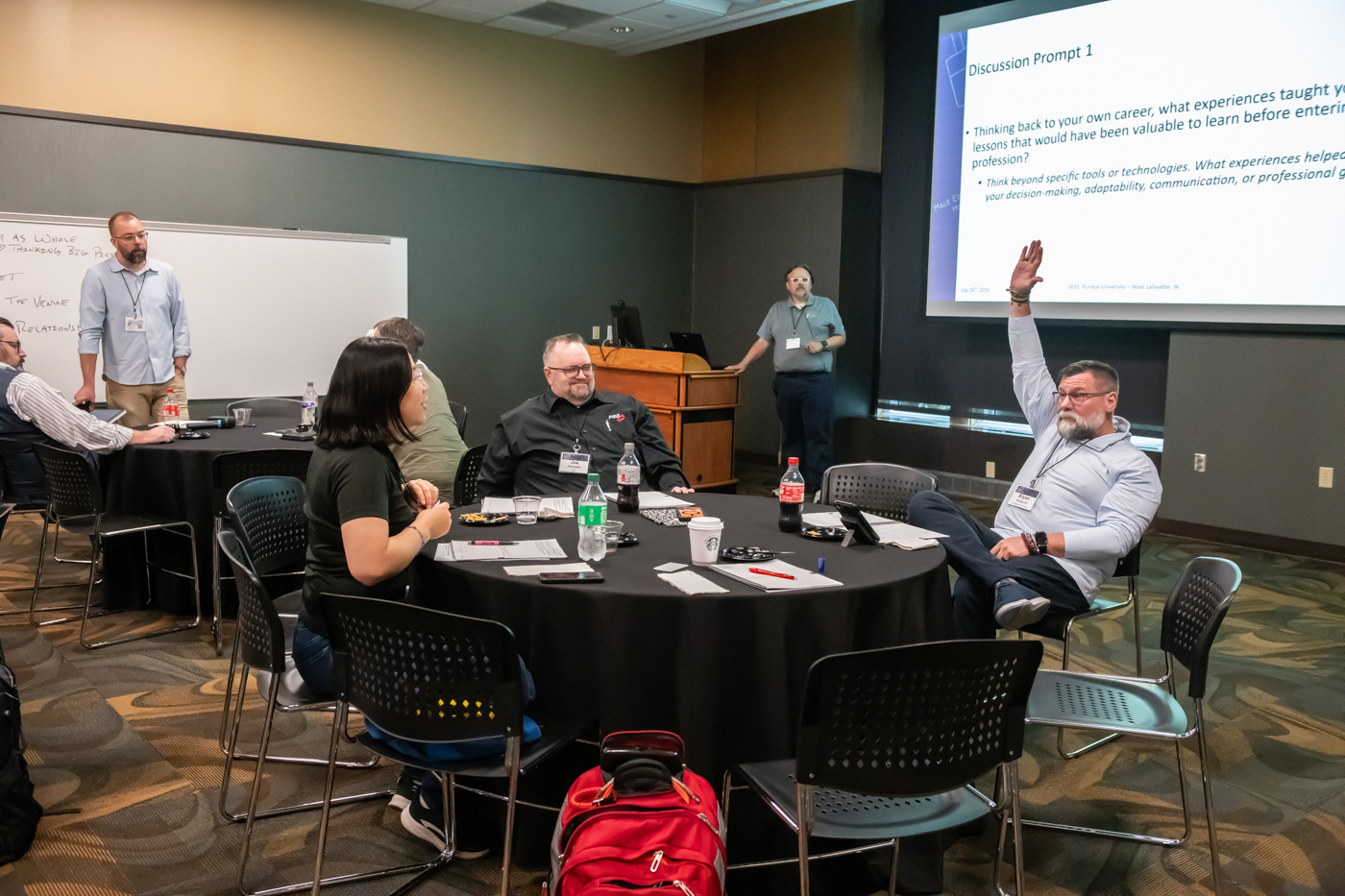
The 2026 Symposium on Education in Entertainment and Engineering was an amazing event at Purdue in July 2026. Photo cred Melodie Yvonne
By Rachael Yanni
The Fusion Studio for Entertainment and Engineering welcomed educators, researchers, designers, engineers, and entertainment industry professionals to Purdue University July 24–25 for the 2026 Symposium on Education in Entertainment and Engineering (SEEE). The two-day event brought together perspectives from academia and industry to explore how the realities of professional entertainment practice can inform the education of the next generation of entertainment engineers, designers, and technical professionals.
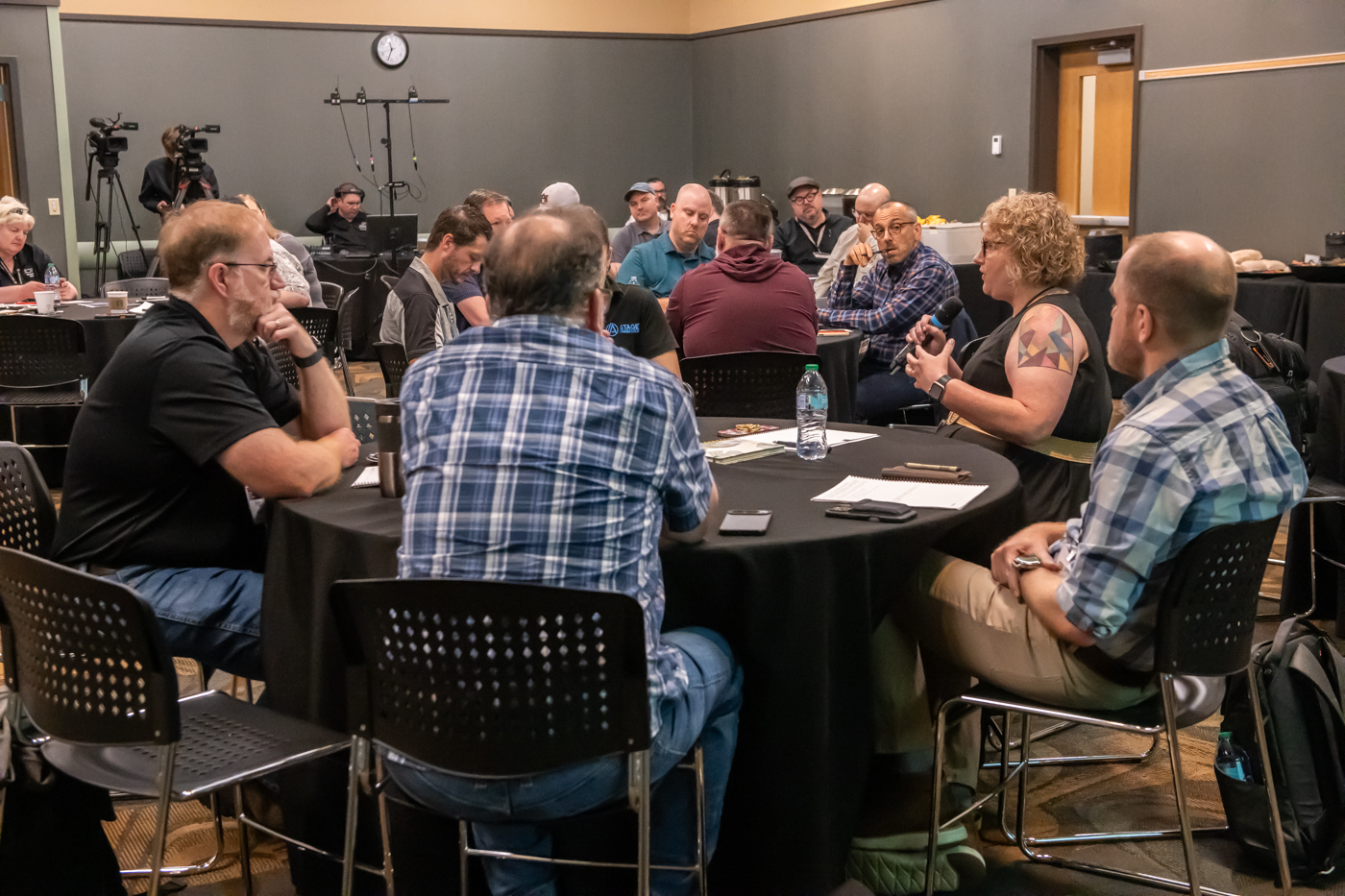
Designed to encourage active participation, the Symposium paired expert panel discussions with facilitated working sessions, allowing attendees to move from conversation toward identifying practical approaches for the classroom. The event also provided opportunities for networking, collaboration, and continued work on initiatives that have emerged from previous Symposium discussions.
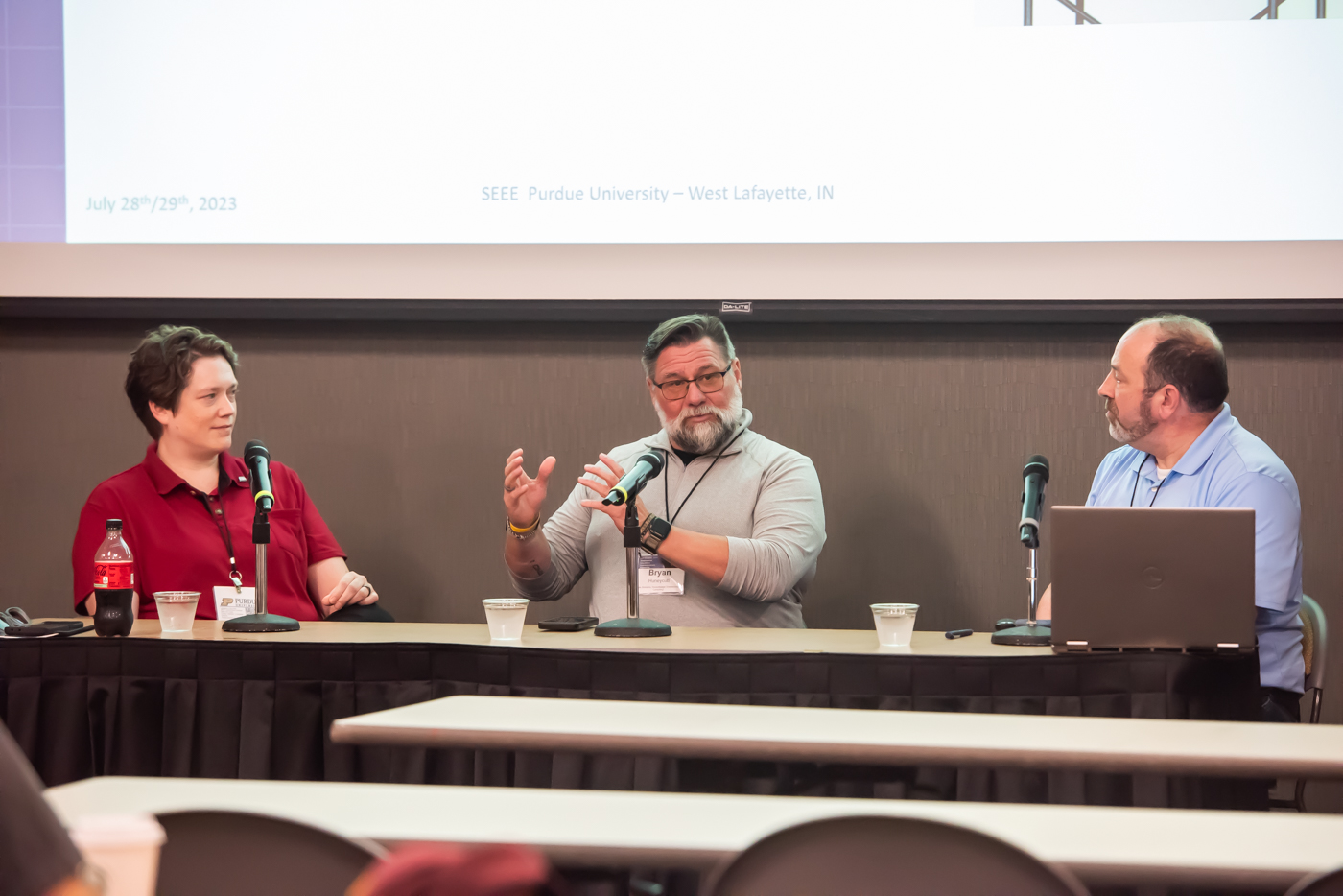
The Symposium opened with “The Load In / Load Out: How Touring and Touring Venues Shape Entertainment and Engineering Education.” Moderated by Davin Huston, Director of Audiovisual Design practice at Passerelle Design Group, the panel featured Matt Jackson, Project Portfolio Director at Adirondack Studios; Jeff Reder, Principal and Owner of Clark Reder Engineering; and Elmer Veith, Head of Sales and Training at Reliable Design Services. Together, they brought extensive experience in theatrical operations, fabrication and construction management, structural engineering, touring, rigging, design, and education.
The conversation continued during “Teaching Touring Logistics, Standards, and Systems Thinking,” a working session focused on how educators can help students develop the adaptability, communication, decision-making, and systems-thinking skills demanded by professional entertainment environments. Participants also considered opportunities for stronger partnerships between industry and academia.
For attendees such as Taylor Gruenloh, Assistant Professor in Theatre & Film at Missouri University of Science and Technology, the opportunity to connect directly with industry professionals was particularly valuable.
“As an educator, I’m thankful for getting the chance to meet industry leaders and hear what they expect from recent graduates of entertainment or engineering programs. It gives me something to bring back to my university and share with my students,” Gruenloh said.
Saturday began with “Designing the Permanent for the Temporary: How Venue Engineering Informs Scenic and Systems Education.” The discussion was moderated by Kimberly Corbett-Oates, Partner at Schuler Shook and an experienced theatre planner and performance equipment designer. She was joined by Bill Gorlin, entertainment engineering consultant and former Vice President of the Entertainment Division at KCI and McLaren Engineering; Michael Schweikardt, professional set designer and Assistant Professor at San Francisco State University; and Iris Williams of InterAmerica Stage. The group brought perspectives spanning theatre planning, structural and entertainment engineering, scenic design, performance spaces, technical standards, and accessibility.
The accompanying working session, “Designing the Designed Space: Teaching Venue and Scenic Engineering Through Case Studies,” explored interdisciplinary collaboration, designing within existing spaces, accessibility, potential liabilities, and ways educators can encourage students to remain curious about what they do not yet know.
The final panel, “When It Breaks: How Failure, Recovery, and Troubleshooting Should Shape Theatre Engineering Education,” examined the important role failure can play in preparing students for professional practice. Moderated by Rich Dionne, Purdue Professor of Practice, Co-director of the Fusion Studio, and specialist in scenery automation and show control systems, the panel featured Dr. Justin L. Hess, Associate Professor in Purdue’s School of Engineering Education; Eric Rouse, General Manager at Sapsis Rigging; and Amber Dewey Schultz, Teaching Assistant Professor of Immersive and Interactive Theatre at the University of Illinois Urbana-Champaign.
During the accompanying working session “Embedding Troubleshooting, Iteration, and Resilience into Entertainment Engineering Education,” attendees considered how failure can become an intentional learning opportunity. Discussion explored common challenges faced by students and early-career professionals and how educators and mentors can create experiences that teach students to troubleshoot, adapt, recover, and apply lessons to future work.
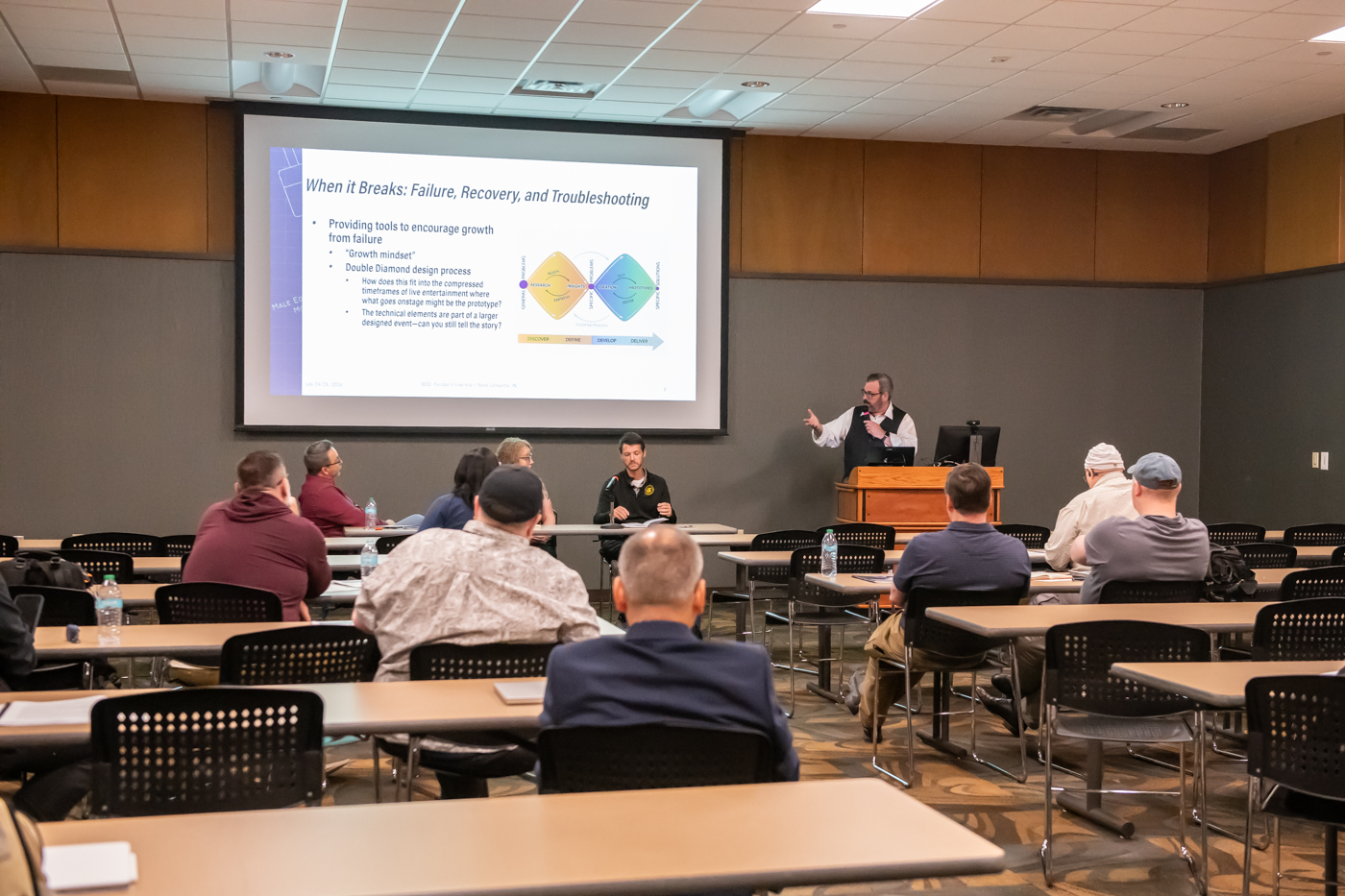
Throughout the Symposium, the emphasis remained on participation and actionable outcomes. Attendees were encouraged to draw upon their own experiences, exchange ideas with colleagues, and identify approaches that could be carried into classrooms, academic programs, and professional practice.
Joseph Champelli, Director of Automation at PRG, highlighted the value of the Symposium’s collaborative format. “I found that working in small focus groups with educators and industry professionals was a great way to share ideas,” Champelli said.
The Symposium concluded with discussion and feedback surrounding ongoing working-group efforts. Building on work begun through previous Symposiums, groups will continue collaborating throughout the coming year on Developing Learning Outcomes for Entertainment Engineering; Developing Collaborative Relationships Between Industry and Academia in Live Entertainment Engineering; and Incorporating Codes, Standards, and Ethics into Teaching Practices in Entertainment Engineering. These groups will continue developing white papers, guidelines, and other resources for educators and industry professionals.
The Fusion Studio thanks all presenters, moderators, attendees, and collaborators who contributed to the 2026 Symposium and to the growing community working to advance entertainment engineering education.
Video recordings of all 2026 Symposium sessions are available on the Fusion Studio YouTube channel: https://www.youtube.com/@PurdueFusionStudio. Those interested in joining one of the ongoing working groups are encouraged to contact the Fusion Studio at fusion-studio@purdue.edu to learn more and get involved.